Dental Clinic
Dental Clinic FAQs
Q1.How often should I visit the dentist?
Most patients should visit every 6 months for a routine check-up and professional cleaning. Some patients with gum disease or other dental concerns may need more frequent visits.
Q2. What happens during a dental check-up?
A routine dental check-up usually includes an oral examination, cleaning, X-rays if needed, cavity detection, gum evaluation, and preventive care recommendations.
Q3. Are dental X-rays safe?
Yes. Modern digital dental X-rays use very low radiation levels and are considered safe for both adults and children.
Q4. What should I do if I have a toothache?
Rinse your mouth with warm water, avoid very hot or cold foods, and contact the clinic as soon as possible.
Q5.How can I prevent cavities?
Brush twice daily with fluoride toothpaste, floss regularly, reduce sugary foods and drinks, and schedule regular dental visits.
Q6. Do teeth cleaning procedures hurt?
Professional cleaning is generally painless. Patients with sensitive gums or heavy tartar buildup may feel mild discomfort, which is temporary.
Get an Appointment
Oral & Maxillofacial Surgeon FAQs
Oral & Maxillofacial Surgeon
Q1. What is an oral and maxillofacial surgeon?
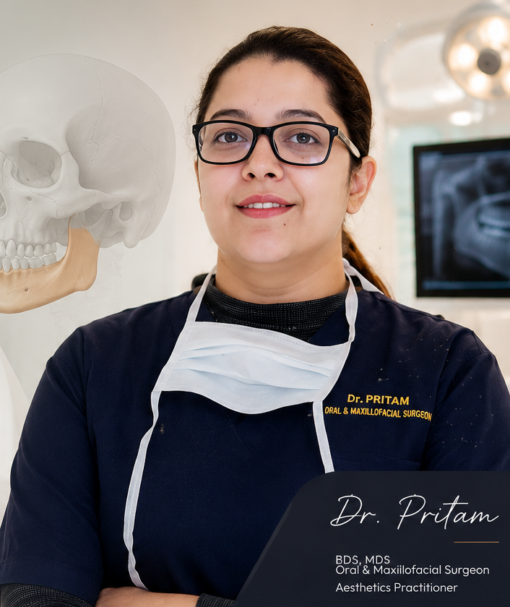
An oral and maxillofacial surgeon is a specialist trained to diagnose and surgically treat conditions involving the mouth, jaw, face, and neck.
Q2. When should I see an oral and maxillofacial surgeon?
You may be referred for wisdom tooth removal, dental implants, jaw pain, facial trauma, oral cysts, tumors, or corrective jaw surgery.
Q3. Is wisdom tooth removal necessary?
Wisdom teeth may need removal if they are impacted, causing pain, infection, swelling, crowding, or damage to nearby teeth.
Q4. Is wisdom tooth surgery painful?
The procedure is performed under local anesthesia, sedation, or general anesthesia, so patients remain comfortable during treatment.
Q5. What are dental implants?
Dental implants are titanium posts surgically placed into the jawbone to replace missing tooth roots and support crowns or bridges.
Q6. What is corrective jaw surgery?
Corrective jaw surgery (orthognathic surgery) treats jaw misalignment that affects chewing, speaking, breathing, or facial balance.